









How News Sources Portray Common Core Policy
This chart shows how major news sources across the ideological spectrum frame common core policy, from left to right-leaning perspectives.



Bias in the media strongly influences how the public interprets major education reforms, and few issues illustrate this better than the Common Core policy debate. Across partisan lines, the Common Core represents a defining clash between federal standards and local autonomy.
While a stance on Common Core education standards is not made clear in the Democratic Party platform, the Republican platform explicitly congratulates efforts to repeal the ‘one-size-fits-all’ standards. While Democrats have traditionally been more supportive of the Common Core, polling in 2016 suggests that voters among both parties are beginning to view its standards negatively; 48% of Democrats support Common Core, compared to only 35% of Republicans. President Obama and his administration were strong advocates of the Common Core standards, even though there has been some division within the party.
A Brief History of Common Core Debate
The Common Core State Standards Initiative emerged in 2009, born from collaboration between the National Governors Association and the Council of Chief State School Officers. Its stated goal was to raise academic expectations and ensure consistent learning outcomes across states. Initially, 45 states and the District of Columbia adopted the new standards, signaling broad bipartisan approval.
The initiative was heavily influenced by the education reform environment that followed the No Child Left Behind Act. It aimed to unify fragmented state systems under a single framework of “college and career readiness.” The Common Core education policy defined what students should know in English Language Arts and mathematics by each grade level, encouraging reasoning and problem-solving rather than rote memorization.
However, implementation revealed deep political fault lines. The Obama administration tied Race to the Top funding to the adoption of “college- and career-ready standards,” which many interpreted as pressure to adopt the Common Core. Critics argued this amounted to indirect federal coercion, eroding the notion of local control in education.
By 2014, states such as Indiana, South Carolina, and Oklahoma had withdrawn, signaling the start of a growing national backlash. Meanwhile, teachers’ unions and parents raised concerns about excessive testing and lack of classroom support, while conservative activists labeled the initiative “Obamacore.”
Democrats’ Stances on Common Core Debate
Within the Democratic Party, Common Core policies were initially viewed as a progressive step toward equity. President Obama, Secretary of Education Arne Duncan, and many Democratic governors framed the standards as essential for “raising the bar” and closing achievement gaps across districts. Democratic supporters argued that consistent benchmarks would ensure that a child’s education quality no longer depended on their ZIP code.
However, divisions emerged within the party. Progressive educators and unions like the American Federation of Teachers and the National Education Association supported the Core’s goals but criticized the rushed rollout and test-heavy accountability systems. They argued that the Common Core movement implementation prioritized standardized testing over genuine learning, placing disproportionate pressure on teachers and students.
Left-leaning critics also highlighted the influence of private philanthropy—notably the Bill & Melinda Gates Foundation—in shaping education reform. Many viewed this corporate involvement as undermining democratic accountability. As opposition spread, Democratic-led states such as New York and California began modifying implementation timelines, signaling internal conflict between reformist and populist factions of the party.
Politicians Who Support Common Core
48% of Democrats support Common Core, beginning to view its standards negatively.

Hillary Clinton
“[The effort to write Common Core and get it adopted] wasn't politicized, it was to try to come up with a core of common standards that would help children learn what they need to learn to be prepared for the 21st-century economy.”

Arne Duncan
“The federal government didn't write them, didn't approve them, and doesn't mandate them, and we never will. Anyone who says otherwise is either misinformed or willfully misleading. ... Some of the hostility to Common Core comes from critics who conflate standards with curriculum, assessments, and accountability. ... The Common Core standards simply establish a high, fair baseline of what children need to know at each grade level to be ready for the real world. They allow for more innovation in the classroom, not less, and they ensure that a child's educational opportunity isn't dictated by the wealth of their community.”
Republicans’ Stances on Common Core Debate
Republican opposition to the Common Core education policy quickly became one of the defining themes of conservative discourse in the 2010s. The Republican National Committee formally condemned the standards in 2013, labeling them an “inappropriate overreach to standardize and control the education of our children.” GOP leaders argued that the policy undermined state sovereignty and local school boards.
Tea Party activists and conservative commentators fueled the Common Core controversy, branding it “Obamacore” and linking it to broader distrust of federal power. Republican governors such as Bobby Jindal of Louisiana and Scott Walker of Wisconsin reversed their prior support and began calling for repeal.
Still, prominent establishment conservatives, including Jeb Bush, Mike Huckabee, and former Education Secretary Rod Paige, defended the standards. They viewed them as compatible with conservative principles of accountability and excellence, emphasizing that the Common Core was voluntary and state-led. This created a Republican divide between populist opponents who rejected all federal involvement and policy-oriented conservatives who saw the standards as pragmatic reform.
Politicians Who Oppose Common Core

35% of Republicans support Common Core, beginning to view its standards negatively.
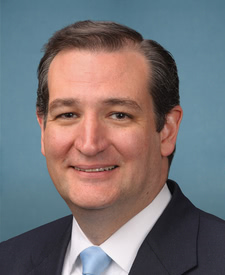
Ted Cruz
“There are core areas that are given to our federal government that they need to do and do well... But there are other areas where the federal government has no business sticking its nose. Areas like education. And we need to repeal every word of Common Core.”
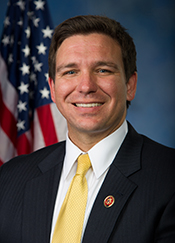
Ron DeSantis
“One of the things that I heard a lot on the campaign trail was a lot of frustration from parents with this thing called Common Core. ... When you talk to parents, they say, 'I can't even help my kid with math because I don’t understand how they're doing it.' We need to ensure school systems are responsive to parents and to students, not partisan interest groups. ... We are going to eliminate Common Core and replace it with state-based benchmarks that focus on excellent student thinking, civics, and American history.”
Political Implications
The Common Core debate demonstrates how education reform can become a political identity issue. While both parties initially supported the Common Core State Standards Initiative, partisan narratives reframed it as a symbol of government overreach versus educational modernization.
For Democrats, support for the standards is aligned with a commitment to equal opportunity and national competitiveness. Yet internal rifts emerged over the role of testing and the perceived corporatization of public education. For Republicans, the Common Core became an emblem of resistance to Washington bureaucracy. As conservative media amplified this message, it transformed an education policy into a litmus test of ideological purity.
Polling trends reflect these shifts. As of the mid-2010s, Democratic support for the Core had fallen to 48%, and Republican support plummeted to 35%, showing bipartisan fatigue with standardized testing and federal intervention.
These partisan divisions also affected teachers and administrators at the local level. In red states, legislative repeals signaled symbolic victories for state sovereignty. In blue states, leaders sought to balance reform continuity with responsiveness to public criticism. The result has been a fragmented national education landscape, where some states retain the Common Core framework under new names, while others revert to pre-Core standards.
What the Future Holds
Despite controversy, Common Core policies continue to shape American education indirectly. Most states still maintain standards closely aligned with the Common Core’s original structure, even if rebranded. Advocates argue that the focus on analytical thinking, literacy across disciplines, and math reasoning has improved instructional quality. Critics counter that without addressing inequities in funding and teacher training, standardized benchmarks alone cannot achieve true equity.
Looking forward, education policymakers face a choice: to rebuild consensus around shared academic expectations or to decentralize entirely in favor of state-specific standards. Federal influence has waned since 2017, leaving states freer to adapt or abandon Common Core–based curricula. Yet in practice, many states continue to rely on the framework as the foundation for future reforms.
The Common Core movement thus illustrates a recurring pattern in American politics: ambitious national reforms that ignite ideological resistance once local control and identity are perceived to be threatened. Whether future education initiatives can avoid this cycle depends on balancing innovation with inclusion—engaging teachers, parents, and local leaders rather than imposing top-down mandates.
To explore how each political party views other key policy topics, visit Biasly’s full list of Political Party Policy Stances.
To unlock more data-driven insights into media bias, explore political leanings with research-backed tools, and customize your news feed around what matters most to you, sign up for a Biasly Premium News Membership.
