









How News Sources Portray Health Care Government Spending Policy
This chart shows how major news sources across the ideological spectrum frame health care government spending policy, from left to right-leaning perspectives.












Government spending on healthcare is a pertinent issue in American politics, and both political parties have contrasting beliefs about the extent of the federal government’s financial involvement. Large quantities of the federal fiscal budget have been allocated to different health programs such as Medicare and Medicaid. Medicare is a federal health insurance program for Americans over 65, and Medicaid is a similar program run by state and federal authorities for low-income individuals.
The majority of government spending on healthcare comes from mandatory spending, or spending that Congress regularly legislates. The debate concerning government health care spending stems from ideological differences concerning whether the government should provide healthcare to every citizen or if privatization of the healthcare system is more beneficial.
According to the Pew Research Center, around 65% of Americans think that the government should be responsible for providing Americans with health care coverage. However, most of the debate surrounding this subject takes place in the Republican Party, as the Democrats overwhelmingly support government-funded national health care. Around 40% of Republicans, as of 2024, agree with Democrats on this issue, leaving about 60% of Republicans and 11% of Democrats who see health care coverage as outside of the federal government’s responsibilities. Compared to 62% of Americans in 2021 who believed the American government should fund healthcare for its citizens, new polls show increased favorability for this stance in recent years.
Republican Stance on Health Care Government Spending
As stated, the Republican Party is the most conflicted about beliefs concerning government-funded health care. As the party that constitutes the most Americans against federally funded health care, it is important to consider the foundational beliefs that influence this ideology.
According to a 2009 Pew Research Study, approximately 68% of Republicans expressed concern about the federal government becoming too involved in healthcare, reflecting some libertarian-leaning Republican policies against expanding the federal government. Three-quarters of the Republican Party agree with more than 90% of Democrats about rising health costs in America, disagreeing instead about the correct solutions. The main disagreement within the Republican Party on healthcare is whether Medicaid and Medicare should continue or if the government should have no involvement at all.
For example, Donald Trump’s 2025 administration claimed in January that they would not cut funds to government-funded health services like Medicaid, which amounted to nearly $900 billion the previous year. But the United States Secretary of Health and Human Services under the 2025 Republican administration, Robert F. Kennedy Jr., has questioned the benefits of Medicaid and claimed that it does not function as intended.
According to KFF polls, while most Americans oppose cuts to these health services, about 72% of Republicans support budget cuts for these programs and do not believe there will be a negative impact. The Republican mindset generally views increasing funds for government-funded healthcare programs as a mistake and instead prefers restructuring or cutting funds as a free-market and limited government solution.
Politicians Who Oppose Health Care Government Spending
72% of Republicans support budget cuts for these programs and do not believe there will be a negative impact.
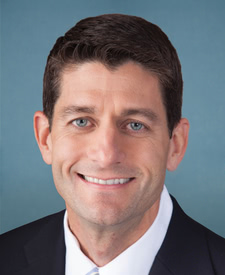
Paul Ryan
“I don't think we should pass bills that we haven't read that we don't know what they cost.”
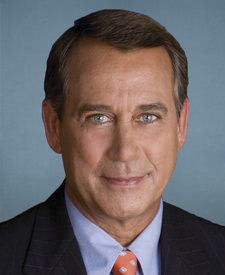
John Boehner
“I think it is important for us to lay the groundwork before we begin to repeal this monstrosity.”
Democratic Stance on Health Care Government Spending
More than eight out of ten Democrats, according to a 2024 poll, agree that the government is responsible for providing Americans with healthcare. The Democratic stance on government-funded healthcare is favorable because many Democrats view healthcare as a right.
While Democratic stances about the government’s responsibility to provide healthcare have not changed significantly in the last five years, the number of Republicans with this view has increased. Within the Democratic Party, the majority belief is that either a single government healthcare program or a combination of private and public health services would be preferred to the current system.
One current Democratic Party belief surrounding government-funded health services is the expiration of President Barack Obama’s Affordable Care Act, a pillar issue in the 2025 government shutdown. With 24 million Americans enrolled in the service, Democrats advocate for renewing the ACA’s premium tax credits to prevent premium increases for enrollees.
According to a 2025 KFF poll, 92% of polled Democrats agree with extending the ACA’s tax credits, highlighting the large number of Democrats who accept government healthcare policies as beneficial. Democrats strongly support expanding government-funded healthcare policies to transform the current American healthcare system, in sharp contrast to the Republican Party.
Politicians Who Support Health Care Government Spending
92% of polled Democrats agree with extending the ACA’s tax credits.

Pramila Jayapal
“It is a travesty when 85 million people are uninsured or underinsured and millions more are drowning in medical debt in the richest nation on Earth. We don't suffer from scarcity in America, we suffer from greed. That's most clear in our broken healthcare system, which is why we need Medicare for All. People deserve and want comprehensive health care that covers mental health, long-term care, reproductive care, dental, vision and hearing, all without copays, private insurance premiums, sky-high deductibles or other hidden fees. Health care is a human right, that is exactly why it's time to pass Medicare for All.”
Joe Biden
“Through the Inflation Reduction Act, a law I proposed and signed... we finally beat Big Pharma. Capped total prescription drugs costs for seniors on Medicare at $2,000 a year, even for expensive drugs, maximum... Look, folks, as I said in my State of the Union, I'm doing everything I can to lower the healthcare cost to provide people with peace of mind—not at the expense of doctors or medicine or hospitals or the drug companies but just to make it fair.”
History of Government Spending on Health Care
The history of federal spending on healthcare is marked by consistent increases in financial investment as a share of the national gross domestic product. The upward momentum of federal funds for health services over decades demonstrates the steadily increasing American interest in government-funded health programs.
In 1960, the creation of Medicaid and Medicare, along with the Kerr-Mills Act, significantly influenced the steady increase in government spending on healthcare for the next fifty years. By 1970, the percentage of the national GDP allocated to health services was around 7%, which would rise to a height of about 19.5% in 2020.
Policy decisions continued in this direction, and legislative measures were taken to enhance the effectiveness of the programs established in the 1960s. For example, in 1982, Medicaid expanded to include children who required institutional care, and in 1986, hospitals were required to stabilize all patients regardless of their ability to pay.
The overall trends for government spending on healthcare are characterized by steady, incentivized financial spending increases that have continued to adapt to contemporary times. These spending increases, while not always in alignment with GDP increases, have resulted in the historical expansion of health services to more Americans, especially those without means.
Government Spending on Health Care Going Forward
The future of government spending on healthcare services will remain a frequently debated topic and stands at the heart of the 2025 government shutdown. According to a survey by the Commonwealth Fund, 82% of Americans agree that the current healthcare system should be “fundamentally changed or completely rebuilt.” Many Americans complain about the poor coordination of medical care, weak communication between medical teams and patients, and a substantial lack of price transparency in hospitals.
Considering these statistics, it is discernible that politicians will continue to pursue government funding for healthcare services, and that the future may hold reform for the entire system. While many Republicans oppose government involvement in healthcare, some moderate House Republicans, like Reps. Jen Kiggans or Jeff Van Drew, believe it is necessary to extend the Affordable Care Act’s tax credits to help Americans afford health insurance.
The future of government healthcare spending remains uncertain and is clouded by partisan nuances. Some Republicans will continue to support the benefits of the private healthcare market in contrast to most Americans, who view the current healthcare system as fundamentally flawed. It is plausible that more Republicans will join this majority viewpoint against the current healthcare structure, which Democrats and moderate Republicans have already adopted, as further developments continue to unfold.
