









How News Sources Portray ISIS Policy
This chart shows how major news sources across the ideological spectrum frame isis policy, from left to right-leaning perspectives.











Since the terrorist attack on the United States by an Islamic extremist group in 2001, national security against terrorism and Islamic militant groups has been a primary focus of American domestic security. A Pew Research survey conducted in 2015 found 93% of Republicans view ISIS as a major threat, compared with 79% of Democrats. This is mirrored in the bipartisan support for President Obama’s plan for a military campaign against Islamic militants in Iraq and Syria, with a majority of Republicans (64%) and Democrats (60%) approving of the president’s plan. To see what side of the spectrum your news is coming from, check out Biasly’s reliability rating of news sources.
When the Bush administration signed the Status of Forces Agreement (SOFA) in 2011, it was not because the war had been won in Iraq, nor was the region fully stable. It was, however, in part because the Iraqi government refused to grant U.S. troops immunity beyond 2011. Shortly thereafter, President Obama was inaugurated into office and carried out the withdrawal, declaring the war officially over.
Although Al-Qaeda had been badly weakened by the war, they were not destroyed. Instead, they retreated and reemerged as the new and much more dangerous group known as ISIS (Islamic State of Iraq and Syria). By 2014, ISIS had captured significant territory in Iraq and Syria, declaring itself a “caliphate,” gaining notoriety for its brutal tactics and effective use of social media for propaganda purposes.
Obama Administration’s Military Campaign
Obama was reluctant to re-engage in large-scale military operations in Iraq. The administration focused on limited airstrikes and support for local forces. However, as ISIS continued to gain ground and commit further atrocities, pressure grew from both political parties’ stances for a more comprehensive strategy.
In September 2014, President Obama announced a robust plan to combat ISIS. This military campaign included expanding airstrikes against ISIS targets in both Iraq and Syria and increasing support for ground forces fighting ISIS. This support was mainly geared towards Iraqi security forces, Kurdish fighters, and providing humanitarian assistance to the affected population.
Additionally, the Obama administration sought to assemble an international coalition to combat ISIS, which included NATO allies, Arab states, and other partners in the region. His “No boots on the ground” approach emphasized that there would be no large-scale deployment of U.S. ground combat troops. Instead, the focus was on airstrikes and training local forces. To pursue this plan, the administration sought Authorization for Use of Military Force (AUMF) through Congress to provide legal backing for the campaign and demonstrate national unity against ISIS. His strategy also incorporated elements of counter-terrorism, including efforts to disrupt ISIS’s financial networks and counter its propaganda.
Some argued that the “no boots on the ground” policy was too restrictive, while others criticized the plan as an overreach of executive power without proper congressional authorization. There were also concerns about the effectiveness of airstrikes alone and the reliability of local partner forces. However, the complexity of the Syrian Civil War made intervening there particularly challenging.
The campaign eventually succeeded in degrading ISIS’s capabilities and reclaiming much of its territory, but the conflict extended beyond Obama’s presidency, with ISIS remaining a threat in various forms. Despite the persistence of ISIS, Obama’s strategy continued to influence subsequent U.S. approaches to counter-terrorism and U.S. policy in the Middle East.
Trump Administration’s Approach to ISIS
President Trump inherited the ongoing conflict and largely maintained the strategy of utilising airstrikes and supporting local forces, rather than an increased boots-on-the-ground approach. In 2019, ISIS lost its last territorial holdings in Syria, marking the end of its self-proclaimed “caliphate.” However, the group transitioned to an insurgency, continuing to carry out attacks in Iraq and Syria. Then, in October 2019, Donald Trump announced the successful assassination of Abu Bakr al-Baghdadi, the organization’s self-declared caliph.
However, even after losing its territory and caliphate, ISIS remained a significant concern. The organization continued to maintain a network of hidden operatives, referred to as sleeper cells, which carried out sporadic attacks in Iraq and Syria. Additionally, the group continued to expand its influence through affiliates in regions such as Afghanistan, West Africa, Southeast Asia, and spread its radical ideology online.
Ongoing conflicts and weak governance in Iraq and Syria have provided opportunities for ISIS to maintain its grip on the region. While thousands of ISIS fighters and their families remain in detention camps, humanitarian challenges remain, and the issue of what to do with captured foreign ISIS members continues unresolved.
Democrat Stance on ISIS
The Democratic Party’s policy stance on Iraq has evolved over time, particularly since the 2003 Iraq War. This war was initiated under a Republican administration, but initially had some bipartisan support. As the Iraq War progressed and became increasingly unpopular, many Democrats began to oppose the conflict more vocally. This shift became a key part of the party’s platform, especially during Barack Obama’s 2008 presidential campaign.
Today, the Democratic Party’s policy stance on ISIS advocates for reduced military presence in Iraq. Its primary focus is on diplomatic and economic engagement, support for Iraq’s sovereignty and democratic institutions, and continued counterterrorism efforts against groups like ISIS, but with a preference for working through local partners and international coalitions. Some specific policy positions often associated with the Democratic approach to Iraq include troop withdrawal, diplomatic engagement, economic support, counterterrorism, and refugee assistance.
The Democratic Party is not monolithic in its views. There is a spectrum of opinions within the party, ranging from those who advocate for complete withdrawal to those who support continued military engagement in specific capacities.
Politicians Who Oppose ISIS

79% of Democrats view ISIS as a major threat.
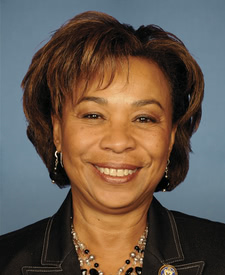
Barbara Lee
“The rapid escalation of another war in the Middle East underscores the danger of the blank check for endless war passed by Congress in 2001. ... There is no military solution to the crisis in Iraq and Syria. In fact, continued U.S. military action will result in unintended consequences. We must remember the roots of ISIS—President Bush's ill-begotten war. Congress needs to debate the political, economic, diplomatic and regionally led solutions that will ultimately be the tools for U.S. and regional security.”

Nancy Pelosi
“The President's decision to withdraw U.S. forces from Northern Syria is a deeply disturbing development that betrays our Kurdish allies who have been instrumental partners in our mission to eradicate ISIS. Despite what the President might say, ISIS remains a serious threat. This reckless, misguided decision undermines the efforts by our brave servicemembers and our allies to end ISIS's tyranny.”
Republican Stance on ISIS
The Republican Party continues to oppose a complete withdrawal of U.S. troops from Iraq and often cites Obama’s withdrawal in 2011 as a mistake that enabled ISIS to gain significant power in the region. Instead, they prefer to keep a small and capable U.S. military presence in Iraq to support counter-terrorism and prevent another resurgence. Additionally, the party supports strengthening the Iraqi government to resist Iranian influence and maintain internal security. Despite advocating for a continued presence in the region, the Republican Party avoids large-scale troop deployments and instead seeks to remain strategically engaged.
Republicans support destroying ISIS militarily through strikes, special operations, cracking down on online propaganda, and gathering intelligence to dismantle remaining sleeper cells. Right-wing politicians also generally support keeping Guantanamo Bay open for captured terrorists and supporting Kurdish or Iraqi allies on the ground.
Politicians Who Oppose ISIS

93% of Republicans view ISIS as a major threat.
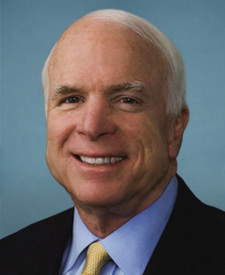
John McCain
“Barack Obama is directly responsible for it because when he pulled everybody out of Iraq, al-Qaeda went to Syria, became ISIS, and ISIS is what it is today thanks to Barack Obama's failures—utter failures, by pulling everybody out of Iraq, thinking that conflicts end just because you leave. So the responsibility for it lies with President Barack Obama and his failed policies.”

Lindsey Graham
“My concern, by the statements made by President Trump, is that you set in motion enthusiasm by the enemy we're fighting. You make people we're trying to help wonder about us. And as they get bolder, the people we're trying to help are going to get more uncertain. I saw this in Iraq. And I'm now seeing it in Syria. ... Every American wants our troops to come home, but I think all of us want to make sure that when they do come home, we're safe.”
Divided on Iraq
While both Democrats and Republicans agree that ISIS is a serious threat to U.S. national security, the difference in their approach to U.S. policy in Iraq reflects deeper partisan divides over the use of American power abroad. Republicans tend to favor a more aggressive military response that involves keeping troops in Iraq and Syria. Meanwhile, Democrats generally advocate for a more restrained foreign policy stance that utilises targeted military action combined with diplomacy and multilateral cooperation. This divergence sheds light on a larger divide over whether the United States should prioritize decisive military decisions or examine ethical and legal constraints more closely before engaging in military action. Check out Biasly’s News Bias Filter to analyze what you’re reading more closely, and not fall prey to the misinformation that is becoming ever so common in the news today.
