









How News Sources Portray Private Enterprise Policy
This chart shows how major news sources across the ideological spectrum frame private enterprise policy, from left to right-leaning perspectives.









Many of the media biases we observe, whether in news coverage or political rhetoric, stem from the fundamental differences in policy perspectives held by major political parties. One of the many key points of conflict is private enterprise.
Private enterprise refers to “firms managed by independent companies or private individuals.” It is the system in which privately owned businesses operate within a market-driven economy. Private enterprise is influenced by government regulation and public policy, often clashing with ideologies between both the political parties.
The concept of private enterprise consists of firms managed by independent companies or private individuals. Enterprise policies drive competition, profit, and innovation, which are central components of economic growth. Both Democrats and Republicans appear to be in support of private enterprise, though differ on the extent of the government’s involvement. This ongoing debate centers on maintaining economic freedom and ensuring accountability.
The Democratic Stance on Private Enterprise
The Democratic platform’s policy stance on private enterprise is very similar to the Republicans’, but with a different approach. The Democrats support a system of private enterprise with government regulation to protect workers, consumers, and the environment. Their platform reflects the belief that unregulated markets can increase inequality. The general idea is that effective oversight is key to promoting fairness and sustainability.
Democrats often advocate for enterprise policies that prioritize corporate social responsibility and ethical governance. Generally, this aligns with the broader goal of reducing economic disparities. The political party acknowledges that balanced regulation and public investment can improve long-term economic outcomes, supporting policies that promote fairness and protections through enterprise policy management. This can ensure private enterprise remains innovative while preventing monopolistic practices and corruption.
At the same time, the party focuses on the importance of corporate responsibility. Democrats argue that private enterprise should contribute to social goals such as regulated wages, sustainability, and innovation. Private companies and governmental policies must work together to address these challenges without undermining market freedom.
Politicians Who Support Private Enterprise
The Democrats support a system of private enterprise with government regulation to protect workers, consumers, and the environment.
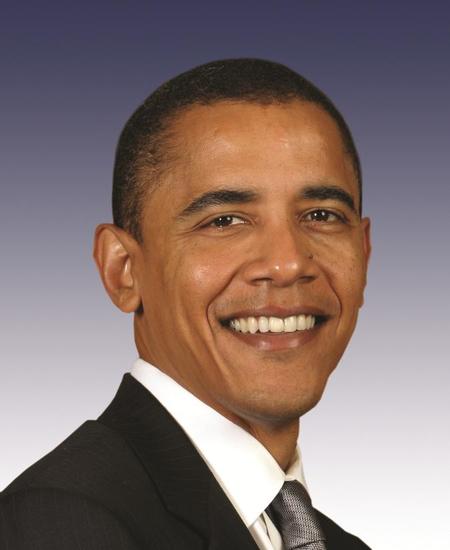
Barack Obama
“Contrary to the claims of some of my critics, I am an ardent believer in the free market. I believe businesses like yours are the engines of economic growth in this country. You create the jobs. You develop new products and cutting-edge technologies. ... Throughout our history, [government] hasn't stepped in to supplant private enterprise, but to catalyze it — to create the conditions for entrepreneurs and new businesses to adapt and thrive.”
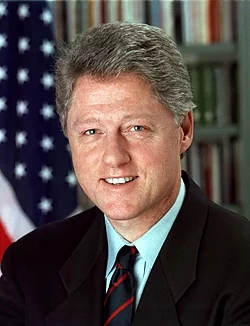
William Clinton
“A government that is leaner, not meaner; a government that expands opportunity, not bureaucracy; a government that understands that jobs must come from growth in a vibrant and vital system of free enterprise.”
The Republican Stance on Private Enterprise
The Republican platform strongly favors a private enterprise system, but unlike the Democrats, it supports policies that minimize government intervention and maximize market autonomy. Competition and deregulation are the main goals of this party as they stimulate innovation and productivity. Republicans tend to oppose more government involvement because it can stifle job growth and harm the economy. They claim that individuals themselves should drive economic growth instead, which would benefit them more.
The Republican policy stance on private enterprise emphasizes lowering taxes, reducing business regulations, and empowering entrepreneurs. By promoting limited government involvement in private enterprises, Republicans argue that markets can operate more efficiently and prosperity will come naturally. This idea reflects a belief that private companies are better equipped than governments to respond to various economic conditions and consumer demands. It also reflects the fact that no government manipulation will occur.
Through the years, Republicans have viewed private enterprise policy as a foundation of American economic strength, promoting programs that align with their broader goal of maintaining a free-market economy.
Politicians Who Support Private Enterprise
The Republican platform strongly favors a private enterprise system.

Ronald Reagan
“There probably isn't any undertaking on earth short of assuring the national security that can't be handled more efficiently by the forces of private enterprise than by the federal government.”
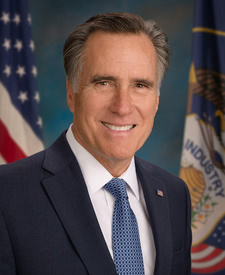
Mitt Romney
“Having spent my life in the private sector, I understand where jobs are created. They're not created in government, they're not created in Washington. They're created on Main Streets and streets all over America. And to help make America the most attractive place in the world for investment, for new enterprise, for entrepreneurs and for job growth... [we must] get regulators and regulations to recognize their job is not to burden the private enterprise system, but to encourage it.”
Policy on Private Enterprise in the United States
U.S. policy on private enterprise reflects a balance between free-market principles and regulatory safeguards. Both the Democratic and Republican platforms expressed some criticism of nationalized enterprise, particularly in the context of trade. While it can be noted that the Republican platform mentioned support for private enterprise more frequently than the Democratic platform, there is no polling to suggest that Democratic voters would support nationalizing enterprise.
Recent debates over enterprise policy and procedures illustrate an ongoing tension between the two parties, essentially, how much regulation should be allowed for fairness and accountability. Democrats tend to advocate for stricter oversight of large corporations as a safeguard against monopolization, while Republicans prefer policies that reduce this government oversight and ensure economic growth. Despite these differences in approach, bipartisan consensus remains that private enterprise is crucial to U.S. innovation, economic stimulation, and global influence.
A Brief History of Private Enterprise in the U.S.
Since the early beginning of the United States, private enterprise has been the key to American identity. There have been early economic policies that encouraged industrial expansion and entrepreneurship for a competition-driven nation. It sets the foundation for a capitalist system.
The Sherman Anti-Trust Act of 1890 was the first Federal act that outlawed monopolistic business practices. Then the New Deal gave rise to reforms that stabilized the economy, created jobs, and established social safety nets. During this time, the Civil Conservation Corp (CCC) and the Civil Works Administration (CWA) alleviates high unemployment, providing a solution for many Americans desperate to find work. In addition, the Federal Emergency Relief Act (FERA) provided grants to state agencies that, in turn, provided economic assistance to the people in those states. To stimulate the economy, the Agricultural Adjustment Act (AAA) increased agricultural prices by controlling the amount of supply, and the National Industrial Recovery Act (NIRA) controlled wages and prices.
After WWII, the U.S. became a global leader in innovation and trade because of a thriving private enterprise system. Many policies during this time fostered an environment where businesses could flourish while the government provided support for infrastructure, defense, and education. Today, there are ongoing debates regarding the balance of enterprise freedom and social responsibility.
What the Future Holds
The future of private enterprise in the U.S. will likely involve continued collaboration between the public and private sectors to provide a proper balance for democracy. Eventually, as industries evolve due to globalization, managing enterprise policies will become increasingly complex. The Democratic Party will likely focus on integrating social and environmental priorities into business practices, while Republicans focus on pushing for deregulation and fiscal incentives to promote innovation and competitiveness.
Future dilemmas will definitely shape how policymakers redefine enterprise policy and how it will apply to business, landowners, and citizens in the coming decades. The crucial challenge would be establishing effective enterprise policies that balance corporate independence with accountability and ensure that private businesses continue to thrive while contributing to public welfare.
Overall, the U.S. is likely to continue applying a mixed approach that balances government regulation with the main components of private enterprise to ensure that economic freedom remains a cornerstone of the American system.
To explore how each political party views other key policy topics, visit Biasly’s full list of Political Party Policy Stances.
To unlock more data-driven insights into media bias, explore political leanings with research-backed tools, and customize your news feed around what matters most to you, sign up for a Biasly Premium News Membership.
