









How News Sources Portray Scientific Research Government Spending Policy
This chart shows how major news sources across the ideological spectrum frame scientific research government spending policy, from left to right-leaning perspectives.














Scientific research government spending refers to how much money the United States government should allocate toward various scientific research projects. In America, the three largest funders of scientific research are the National Institutes of Health (NIH), the National Science Foundation (NSF), and the Department of Defense (DOD).
The NIH is the largest funder of biomedical and public health research in the world, focusing on matters of healthcare. It is responsible for major breakthroughs such as the use of fluoride to prevent tooth decay, the treatment of mental disorders, and the creation of vaccines. The NSF focuses on interdisciplinary subjects such as mathematics, economics, and social sciences. The DOD funds programs that aid the United States militarily.
Government spending on science in the United States accelerated during World War 2, leading to the creation of radar, new medical drugs, and nuclear weapons, all of which aided in the West’s victory. A few years later, the NSF was created to promote collaboration between the government and universities.
During the Cold War between the United States and the Soviet Union, modern day Russia’s launch of Sputnik served as a wake-up call for government spending on science and technology. In the decades that followed, bipartisan support led to massive increases in funding for research programs, especially on space-related and health-related matters.
An April 2025 poll by the Association of Science and Technology Centers found that 90% of Americans use information that is based on federal science research, such as weather forecasts, job market reports, and food safety warnings. However, science policy issues have become a polarizing subject in recent years.
In 2025, the Trump administration cut funding to the lowest level in at least 35 years. This included wide-ranging cuts to education, biology, social sciences, geosciences, math, physics, chemistry, and engineering. Technological innovation and cyberinfrastructure saw significant funding increases.
The Democrat Stance on Scientific Research Government Spending
The Democratic Party policy stance on scientific research government spending strongly favors increased funding in the United States. Democrats have strongly pushed back against the Trump administration’s cuts to federal research funding, arguing that not only do cuts prevent life-saving advancements, but they also endanger lives. An April 2025 The Science Coalition poll found that 69% of Democrats supported investing more federal funds into scientific research.
In 2022, President Joe Biden signed the CHIPS and Science Act, a law designed to boost domestic research spending and fund the domestic manufacturing of semiconductors, which power most modern electronics around the world. In the House, all Democrats except for one member voted for the bill. In the Senate, all Democrats voted for the bill, though Vermont Senator Bernie Sanders, an independent who caucuses with the party, opposed it.
Politicians Who Support Scientific Research Government Spending

69% of Democrats supported investing more federal funds into scientific research.

Joe Biden
“We used to invest significant amounts of money in research and development. We stopped doing it, but I was determined we were going to do it again. It's one of the most significant science and technology investments in our history... It isn't just about investing in America, it's about investing in the American people as well.”

Charles E. Schumer
“Winning the race to innovate and scale quantum computing will position the U.S. to continue to lead the global economy... It is more important than ever to invest in regional quantum computing research so we don't fall behind our competitors, which is why I am proud to be part of the introduction of the Advancing Regional Quantum Hubs Act... I've delivered historic federal funding for quantum research in New York and across the country and will continue fighting to ensure we stay a quantum leap ahead of the competition.”
The Republican Stance on Scientific Research Government Spending
The Republican Party stance on scientific research funding in the United States is fractured. In an April 2025 The Science Coalition poll, 55% of Republicans supported increasing federal funds into scientific research. Yet, this strong support among voters is not mirrored in Congress or by the Trump administration.
In 2022, a faction of 17 out of 50 GOP senators supported the CHIPS and Science Act. In the House, only 24 Republicans supported the bill, while 187 voted against it at the direction of the House GOP leadership. In 2025, the Trump administration cut $783 million from the NIH, claiming that these funds were being used for diversity, equity, and inclusion programs.
Opposition to scientific research funding among conservatives is tied to their broader position on fiscal policy spending. Republicans generally believe that government spending should be reduced, not increased. This also applies to matters such as Social Security, taxes, and healthcare. Further, some Republicans argue that federal funds are being misused to help Democratic Party causes, and that the private sector should be free to handle these causes through innovation and market efficiency.
Politicians Who Oppose Scientific Research Government Spending

55% of Republicans supported increasing federal funds into scientific research.

Rand Paul
“This year, I'm spotlighting a jaw-dropping amount of government waste—the kind that makes you wonder if anyone in Washington has ever heard the word 'priorities.' ... [For example], researchers at Brown University are enlisting monkeys to play a video game they invented called 'Planko' ... The groundbreaking conclusion? Monkeys are very good at Plinko. Our country is over $38 trillion in debt ... Taxpayers can't afford to fund everything that people want.”
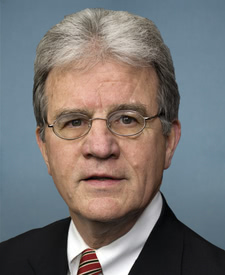
Tom Coburn
“A dollar lost to mismanagement, fraud, inefficiency or a dumb project is a dollar that could have advanced scientific discovery. ... The social sciences should not be the focus of our premier basic scientific research agency. ... [We must question] whether these social sciences represent obvious national priorities that deserve a cut of the same pie.”
The Future
With government spending on scientific research dipping to its lowest level in many decades, there are questions about whether the United States will remain the global powerhouse in scientific research moving forward. Many people fear that other nations will lead the charge in developing vaccines, curing diseases, and developing advanced technologies as America loses its influence worldwide.
