









How News Sources Portray Student Debt Cancellation Policy
This chart shows how major news sources across the ideological spectrum frame student debt cancellation policy, from left to right-leaning perspectives.









Student debt cancellation has been a highly debated topic among political candidates and has only become more divisive over time. Biased news can be especially harmful when discussing a topic such as student debt cancellation, as 42.2 million student borrowers have outstanding federal loan debt. Student debt cancellation, also referred to as student loan forgiveness, is the provision to cancel the outstanding debt of college graduates. Those with student loan debt are then no longer required to make payments on all or a portion of their loan debt.
Student Debt Cancellation: Pros and Cons
Student loan forgiveness offers numerous benefits, including increased economic stimulus, addressing social inequalities, and potentially boosting employment rates. Student loan cancellation could lead to increased spending, thus stimulating the economy, due to increased disposable income from debt cancellation. Each time a consumer’s student debt-to-income ratio increased by 1%, their consumption may decline by as much as 3.7%. Reduced financial stress from student loan cancellation could cause more people to explore entrepreneurial options, contributing to economic growth and job creation. Would-be entrepreneurs are 11% less likely to start a business if they owe more than $30,000 in student loan debt.
Student debt cancellation would address social inequalities, as women and minorities, on average, tend to have the greatest student debt burden. Women owe the majority of the federal student loan debt (60.3%), and those with a bachelor’s degree only earned 72.3% of what their male counterparts earned in 2023. African American college graduates owe an average of 88.3%
more in student loan debt than white college graduates. Forgiving student loan debt would benefit these groups and help ensure equity within secondary education opportunities.
Employment rates may increase as a result of student loan forgiveness. Reduced debt may encourage more people to attend secondary education, as many would be reassured that they could afford it. If more people attend college, employment rates for careers requiring degrees would increase.
Student loan forgiveness also has its drawbacks, the main one being the cost. Cancelling up to $40,000 in student debt relief per borrower would cost $844.5 billion, while cancelling up to $60,000 would cost $981.8 billion from the federal government. The average debt among all federal student loan borrowers is $50,908. To fight higher inflation rates, the Federal Reserve would need to raise interest rates by approximately 50 to 75 basis points. This would directly impact individuals and businesses, as loans and credit cards would become more expensive. Credit scores may also be negatively impacted because student loans are installment loans, and their elimination can decrease the diversity of the credit mix.
Republican Stance on Student Debt Cancellation
The Republican stance on student debt cancellation tends to be more negative, as most Republicans disapprove of many student debt cancellation programs. 72% of Republicans opposed President Biden’s executive order to forgive student debt in 2022. Furthermore, Elizabeth Warren also announced a student debt cancellation plan, which 36% of Republicans reported that they would support cancelling up to $50,000 of debt for those whose household incomes totaled less than $100,000.
Overall, Republicans tend to oppose broad student debt cancellation because they argue it is unfair to taxpayers, people who never attended college, and borrowers who already paid off their loans or avoided debt. They also criticize large-scale forgiveness as expensive and believe major loan cancellation should be decided by Congress, not done through executive action by the president. From their perspective, canceling debt shifts the cost of college loans onto the public without solving the deeper problem of rising tuition and weak accountability in higher education.
Instead of broad cancellation, Republicans usually favor targeted help for borrowers who are truly struggling, along with reforms to the student loan system. They support limiting overly generous repayment programs, reducing federal spending, changing income-driven repayment plans, and holding colleges accountable when their programs leave students with high debt and poor job outcomes. Overall, their stance is that student debt policy should focus on fairness, taxpayer protection, repayment reform, and lowering college costs rather than blanket loan forgiveness.
Politicians Who Oppose Student Debt Cancellation
72% of Republicans opposed President Biden’s executive order to forgive student debt.
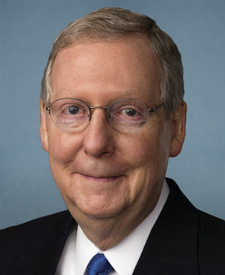
Mitch McConnell
“President Biden's student loan socialism is a slap in the face to every family who sacrificed to save for college, every graduate who paid their debt, and every American who chose a certain career path or volunteered to serve in our Armed Forces in order to avoid taking on debt. This policy is astonishingly unfair.”
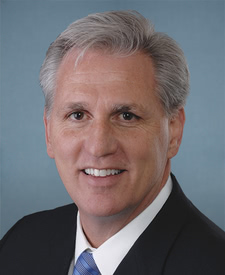
Kevin McCarthy
“Biden's debt transfer scam will make inflation even worse and does nothing to stop the runaway cost of college for most families.”
Democratic Stance on Student Debt Cancellation
The Democratic stance on student debt cancellation is more positive, as Democrats generally approve of student debt cancellation programs. Polling reveals that 80% of Democrats supported President Biden’s executive order, compared to just 28% of Republicans. Concerning Elizabeth Warren’s cancellation plan, 70% of Democrats said they would support the $50,000 reduction, compared to 36% of Republicans.
Democrats generally support student debt cancellation because they see student loan debt as a major financial burden on millions of Americans. They argue that forgiveness can provide economic relief, improve financial stability, expand opportunity, and help borrowers make major life decisions such as buying homes, starting families, or building savings. Democratic proposals often favor broad relief but usually include eligibility limits, with extra help for lower-income borrowers, Pell Grant recipients, and communities that have been disproportionately affected by student debt.
Democrats also connect student debt cancellation to reducing racial and economic inequality, since Black, Hispanic, younger, and lower-income borrowers often carry heavier debt burdens. While many Democrats support using executive action to provide relief, Biden’s broad cancellation plan faced a major Supreme Court setback, leading Democrats to pursue more targeted forgiveness and repayment reforms. Overall, their stance is that student debt relief should reduce financial hardship, make the system fairer, and support economic mobility.
Politicians Who Support Student Debt Cancellation
80% of Democrats supported President Biden’s executive order.
Elizabeth Warren
“President-elect Biden will have the ability to administratively cancel billions of dollars in student loan debt using the authority that Congress has already given to the Secretary of Education. This is the single most effective economic stimulus that is available through executive action.”
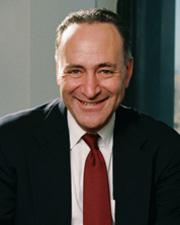
Charles E. Schumer
“For generations, higher education has been a ladder up into the middle class, especially for Black, Latino and Asian Americans. But for too many today, student debt has become the anchor weighing them down, making it harder to start a family, buy a home and live with financial independence.”
Current Loan Forgiveness Programs
There are currently some forms of loan forgiveness programs that forgive loans to a certain extent, and with specific requirements.
The Public Service Loan Forgiveness (PSLF) program forgives the remaining balance of federal student loans for borrowers who work full-time in public service (either by a government or not-for-profit organization) and make qualifying payments for 10 years. Borrower Defense Discharge programs are a legal ground for discharging federal Direct Loans, and allow borrowers to discharge their federal student loans if their school defrauded or misled them.
Income-Driven Repayment (IDR) is another plan of forgiveness, adjusting monthly payments based on income and family size. Depending on these factors, payments can be as low as $0 a month, and after a certain number of years of making these payments, remaining loan balances may be forgiven. The Saving on a Valuable Education (SAVE) is a popular income-driven repayment plan for federal student loans.
These are just some of the current programs offered that may help forgive some student loans if certain requirements are met. These are continuously changing, however, with evolving politics.
The Future of Student Loan Forgiveness
Student loans are unlikely to be entirely forgiven anytime soon due to the current administration. The Trump Administration’s student debt cancellation policy has threatened current loan forgiveness programs. The One Big Beautiful Bill that was recently passed and became law, for example, may leave borrowers without an affordable option to repay their loans as it phases out several income-driven repayment plans.
SAVE, as discussed above, is highly regarded as the most affordable repayment program ever, and is now defunct (no longer in effect or use) under this new law. Discussions of the PSLF going defunct have recently surfaced, as Democrats worry that student loan forgiveness will become a thing of the past. The Trump Administration may add eligibility restrictions to the PSLF, potentially eliminating non-profit employees from participating. President Trump has made efforts to defund, cut, and lay off the Department of Education, which has overall limited borrowing, overhauled repayment plans, and restricted access to forgiveness programs.
Nonetheless, student loan forgiveness is certainly possible in the U.S., though it is highly unlikely within at least the next few years. Expansive student debt cancellation plans are most likely to be enacted under a Democratic administration or presidency, as Democrats largely favor them.
To learn more about biases and party affiliation, visit www.biasly.com. Biasly also offers a Premium Membership for an in-depth analysis of current news and access to bias analytics, discussions, and more.
