









How News Sources Portray War on Drugs Policy
This chart shows how major news sources across the ideological spectrum frame war on drugs policy, from left to right-leaning perspectives.















The opinions surrounding various topics have undergone drastic changes since their implementation, largely due to shifting cultures and technological advancements, including the War on Drugs. Those advocating for the War on Drugs often had biased news and political bias that accompanied news coverage and policy. Bias in media is particularly harmful when covering controversial and complex topics such as the War on Drugs.
The War on Drugs refers to the government-led initiative in the U.S. beginning in the 1970s and continuing to the present day. The initiative sought to reduce or eliminate illegal drug trade, distribution, and use through increased funding for drug control agencies and harsher penalties, such as longer or mandatory minimum sentences for those found in possession of drugs. President Nixon officially announced the War on Drugs, but the U.S. had been fighting drugs for decades.
A Brief History of the Drug War
The War on Drugs’ history began in the late 1800s when the California government enacted an ordinance making it a misdemeanor to maintain or visit places where people smoked opium, which were mainly in Chinese immigrant neighborhoods. The first federal drug law, the 1909 Smoking Opium Exclusion Act, prohibited the transport and use of opium in the U.S.
President Nixon signed the Controlled Substances Act into law in 1970, which classifies drugs on a five-point “schedule” scale rated by medical benefits and level of potential for abuse. However, this scale did more harm than good, as it harbored fear and stigma in the system, rather than relying on science. In 1971, Nixon declared a War on Drugs. He increased the size and presence of federal drug control agencies and established the Drug Enforcement Administration (DEA) in 1973.
At the beginning of his term, President Carter sought to decriminalize marijuana. In October 1977, the Senate Judiciary Committee voted to decriminalize the possession of marijuana of up to one ounce for personal use.
During his presidency, George W. Bush funded the War on Drugs and escalated the militarization of domestic drug law enforcement. His administration focused on marijuana use and student/teen drug testing. Despite these efforts, drug use remained constant, and overdose deaths skyrocketed.
In 2020, Oregon voters passed a ballot initiative decriminalizing the possession of small amounts of all drugs, but shortly afterward, they recriminalized it after a well-funded disinformation campaign. In 2024, 88% of American citizens supported the legalization of marijuana for medical and recreational use. The use of soft drugs, especially, has become increasingly normalized.
Republican Stance on the War on Drugs
Republicans tend to support the War on Drugs, especially since Republican presidents (Reagan, Nixon, H.W. Bush, etc.) initially advocated for it. Polling shows that 39% of Republicans favor the legalization of marijuana, which is nearly half of Democrats, and also view marijuana as more dangerous than Democrats do. The Republican Party Platform consistently supports the War on Drugs, contending that the government has made significant progress over the last three decades against drug use.
Republicans have traditionally supported a “tough on drugs” approach that emphasizes law enforcement, prosecution, and strong penalties for drug trafficking and drug-related crime. Their stance often connects the War on Drugs to public safety, national security, border control, and opposition to drug legalization or decriminalization. Republican policies have commonly backed stronger sentencing, expanded policing, anti-cartel efforts, drug testing, and stricter border enforcement to reduce the supply of illegal drugs and punish traffickers.
At the same time, Republicans have also supported prevention, education, treatment, and recovery programs, especially as the opioid crisis shifted attention toward addiction as a public-health issue. Some Republicans now support more treatment-based or harm-reduction measures, such as naloxone access or addiction recovery programs, while others remain skeptical of reforms they see as too lenient. Overall, the Republican stance combines strong enforcement against drug crime with varying levels of support for prevention and treatment.
Politicians Who Support War on Drugs
39% of Republicans favor the legalization of marijuana.

Richard Nixon
“America's public enemy number one in the United States is drug abuse. In order to fight and defeat this enemy, it is necessary to wage a new, all-out offensive. ... This will be a worldwide offensive dealing with the problems of sources of supply, as well as Americans who may be stationed abroad, wherever they are in the world. It will be government-wide, pulling together the nine different fragmented areas within the government in which this problem is now being handled, and it will be nationwide.”
Ronald Reagan
“We're making no excuses for drugs — hard, soft, or otherwise. Drugs are bad, and we're going after them. As I've said before, we've taken down the surrender flag and run up the battle flag. And we're going to win the war on drugs.”
Democratic Stance on the War on Drugs
Democrats generally oppose the War on Drugs, largely because drugs have imprisoned millions of Americans, who are disproportionately black and Latino. Democrats also contend that the War on Drugs hasn’t been effective in reducing drug use, which will be discussed later. The same poll from above reports that 63% of Democrats favor legalization, compared to the 39% above. The Democratic Party Platform continuously renounces the War on Drugs and calls for a reversal.
However, both parties have become less supportive of the movement overall. 51% of Republican and 77% of Democratic voters believe that the justice system should focus on the rehabilitation of drug users rather than prosecution. A different survey reveals that 49% of Republicans and 66% of Democrats have a positive view of the move away from mandatory drug sentences, which increased by 8% and 18%, respectively, since 2001.
Politicians Who Oppose War on Drugs
63% of Democrats favor legalization of marijuana.
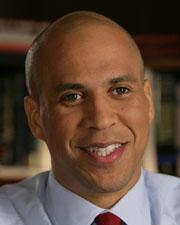
Cory A. Booker
“These are very typical, painful issues to the point now that... this war on drugs, which has been a war on people, we now have had a 500 percent increase in the prison population since 1980, overwhelmingly black and brown. These are real, painful, hurtful issues.”

Beto O'Rourke
“We don't only need to legalize marijuana. We also need to repair the damage done to communities of color that have been locked up in our criminal justice system, or locked out of opportunity, because of the War on Drugs.”
Effectiveness of the War on Drugs
The War on Drugs’ effectiveness is not as high as some would have hoped. By 2010, the War on Drugs had met few to none of its goals, specifically the widespread use of illegal substances, violence, and crime. The U.S. government had put too much effort into catching and arresting drug dealers instead of treating the addiction that made drug dealing a booming business. The current drug policies do not affect drug use reduction. Drug addiction costs the U.S. $215 billion every year; however, the drug industry provides around $320 billion every year to the U.S.
Critiques of War on Drugs policies could include the cost, as the estimated financial cost of promoting and supporting the War on Drugs is higher than many would expect. The U.S. has spent around $33 billion marketing the War, $20 billion combating drug cartels located in the U.S., $49 billion on law enforcement funds, $450 billion to process over 37 million drug offenders, and more expenses. For the amount of money spent on the War on Drugs, its results are not providing what supporters had hoped.
The Future of the War on Drugs
Recently, the War on Drugs movement has shifted from viewing drugs as a crime to viewing them as a public health issue. Some policies aim to seek the overall cause of drug use and how to combat its effects. The government has also implemented policies to minimize the negative consequences of drug use without advocating for abstinence, such as overdose prevention with the distribution of Narcan and hotlines that people can use if they choose to use hard drugs like fentanyl.
Most states in the U.S. (39) have legalized marijuana for medical use, and 24 states for medical and recreational use. Soft drug use has become increasingly more normalized, especially since some states have legalized recreational and medical use of marijuana for those over 21 years of age. The U.S. appears to be moving in a more progressive direction, with states acknowledging some potential benefits of soft drugs and more people believing that alcohol is more dangerous than marijuana, on average.
To learn more about media bias and party affiliation, visit www.biasly.com. Biasly also offers a Premium Membership for an in-depth analysis of current news and access to bias analytics, discussions, and more.
