









How News Sources Portray War on Terror Policy
This chart shows how major news sources across the ideological spectrum frame war on terror policy, from left to right-leaning perspectives.







Several topics in contemporary politics have become increasingly partisan-based, and, while there can be unbiased news sources, more often than not, sources have their own bias and express that through media bias. One such topic concerns the War on Terror.
The War on Terror is an international, American-led military campaign following the 9/11 terrorist attacks, launched during the Bush Administration, to seek out and stop terrorists around the world. The Global War on Terror began by focusing on al-Qaeda, but quickly spread to other terrorist groups around the world. The War on Terror then became a political topic, as parties differ in their opinions.
A Brief History of the War on Terror
After the Global War on Terror campaign began in September 2001, President Bush announced that the U.S. had initiated military action in Afghanistan in October 2001 to continue to fight the War on Terror. The first strikes were focused on al-Qaeda and the Taliban military locations in Afghanistan. The U.S. then actively began to utilize a military base in Guantanamo Bay, Cuba, in 2002 as a detention facility for terrorists.
In late 2002/early 2003, the U.S. was exerting pressure on Iraq to ensure that its commitment to break ties with terrorists and destroy weapons of mass destruction was carried out. Saddam Hussein refused to disarm Iraq, and President Bush relayed this information to the UN to express the U.S.’s concerns. Military operations were activated in March 2003 to remove Saddam Hussein from power. The U.S. military captured Saddam Hussein in late 2003. The War on Terror continues to this day, but the U.S. has not participated in any wars concerning terrorism since the Iraq War.
Effects of the War on Terror
The War on Terror has had some beneficial and harmful effects. One beneficial effect includes the capture of numerous terrorist leaders and the partial elimination of several terrorist groups. This disrupted their ability to produce and plan new attacks, and thus prevented further global attacks. The War on Terror has also increased international cooperation; most U.S. allies viewed the 9/11 attack as an attack on them as well, which meant that they also participated in the War on Terror.
The War on Terror has had some underlying harmful effects, one of which was the high cost, both in terms of deaths and finances. Experts have estimated that trillions of dollars and hundreds of thousands of deaths have been spent to fight terrorism. The War on Terror has also caused destabilization in the Middle East, particularly in Iraq and Afghanistan. Although old terrorist groups, such as the Taliban and al-Qaeda, have been partially eliminated, new ones are taking their place. Another con of the War on Terror is the fight in itself, as terrorism may never be fully eliminated. Terrorist groups may always exist, whether the U.S. knows of them or not, which makes this war never-ending.
Republican Stance on Terrorism
The Republican stance on terrorism is firm, and fighting terrorism is one issue that Republicans feel strongly about. They believe that the U.S. should combat terrorism overseas before terrorists can attack the U.S. again. The Republican Party Platform has established that terrorists declared war on the U.S. through the 9/11 attacks, and that the U.S. has declared war on the terrorists. Republicans believe that terrorists cannot be changed or reformed, and the U.S. should make terrorists pay for the pain they inflicted. They stress that only the destruction and annihilation of terrorism can allow for freedom to ensue.
Overall, Republicans usually take a security-first stance on terrorism. They tend to support strong military power, intelligence gathering, border enforcement, counterterrorism spending, and aggressive action against terrorist groups. They often argue that the U.S. should prevent attacks through strength, preparedness, and direct action when necessary.
At the same time, Republicans are not completely unified. Some support major overseas counterterrorism missions, while others prefer a more limited “America First” approach focused on protecting the homeland. But most Republicans agree that terrorism should be treated as a major national security threat requiring strong government action.
Politicians Who Support War on Terror
The Republican stance on war is mostly in support, emphasizing a strong military and support for military intervention.

George Bush
“Our war on terror begins with al Qaeda, but it does not end there. It will not end until every terrorist group of global reach has been found, stopped and defeated. ... Every nation, in every region, now has a decision to make. Either you are with us, or you are with the terrorists. From this day forward, any nation that continues to harbor or support terrorism will be regarded by the United States as a hostile regime.”
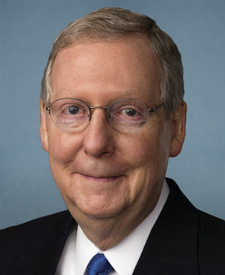
Mitch McConnell
“Some in America may think our war against terrorism is sunsetting, but clearly the terrorists do not agree. And when we deploy our servicemembers in harm's way, we need to supply them with all the support and legal authorities that we can.”
Democratic Stance on Terrorism
The Democratic stance on terrorism tends to be more construed and complex. Democrats believe that there is not just one way to combat terrorism, and the military should remain the last resort for resolving conflicts. They emphasize international cooperation, security measures, intelligence gathering, and addressing the root cause of terrorism instead of terrorism at face value. Democrats believe that working with allies should be at the forefront of attempts to eliminate terrorism instead of taking the issue on without communication or collaboration from other countries.
Polling reveals that 46% of Republicans believe that their party could do a better job of handling the terrorist threat than Democrats. The same poll says that 68% of Republicans say the Islamic religion is more likely than others to encourage violence among its believers, versus just 30% of Democrats.
Politicians Who Oppose War on Terror
Democrats value the fight against terrorism, but also hold that military forces should be the last resort for solving foreign conflicts.
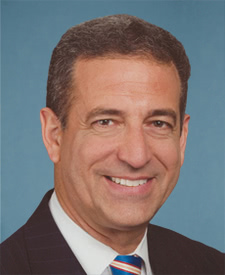
Russell Feingold
“We must redouble our vigilance to ensure our security and to prevent further acts of terror. But we must also redouble our vigilance to preserve our values and the basic rights that make us who we are. ... The Congress will fulfill its duty only when it protects both the American people and the freedoms at the foundation of American society.”

Robert Byrd
“We proclaim a new doctrine of preemption which is understood by few and feared by many. We say that the United States has the right to turn its firepower on any corner of the globe which might be suspect in the war on terrorism. We assert that right without the sanction of any international body. As a result, the world has become a much more dangerous place. We flaunt our superpower status with arrogance.”
The Future of Terrorism and War
Terrorism is expected to persist well into the future. Terrorist groups are difficult to fully eradicate, and even after eliminating them, they may reignite.
As for the future of war, the U.S. has just recently entered into a war that was between Israel and Iran in June 2025. Israel struck Iran out of fear that they were developing nuclear weapons, and Iran fought back. The U.S. released three missile strikes on Iranian nuclear sites to support Israel, and Iran retaliated by striking U.S. military bases in Iraq and Qatar.
Democrats and Republicans have differing opinions on these recent events. Democrats in Congress claimed it was unconstitutional and could position the U.S. into a broader war in the Middle East. Top Republicans, however, supported President Donald Trump’s decision to strike Iran, saying that it was necessary to hinder Iran’s ambitions of developing a nuclear weapon. Republicans claim that Iran had rejected diplomatic attempts to curb the nuclear program, and the strikes were the backup option. Republicans praise President Trump’s strength in striking Iran, while Democrats criticize the move.
To learn more about biases and party affiliation, visit www.biasly.com. Biasly also offers a Premium Membership for an in-depth analysis of current news and access to bias analytics, discussions, and more.
