




64% Medium Right
Bias Meter
Extremely
Liberal
Very
Liberal
Somewhat Liberal
Center
Somewhat Conservative
Very
Conservative
Extremely
Conservative
-100%
Liberal
100%
Conservative

Biasly determines media bias ratings through a dual-layered approach combining artificial intelligence and analyst review. The platform’s proprietary bias detection engine, Bias Meter, evaluates sentiment, policy position alignment, and language framing across thousands of data points in news articles. Analysts then verify and interpret the AI’s findings, providing additional context where needed. Learn more about ratings
- Profile
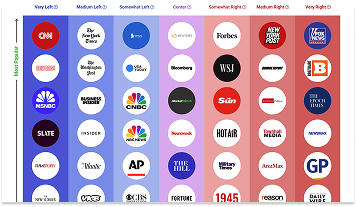
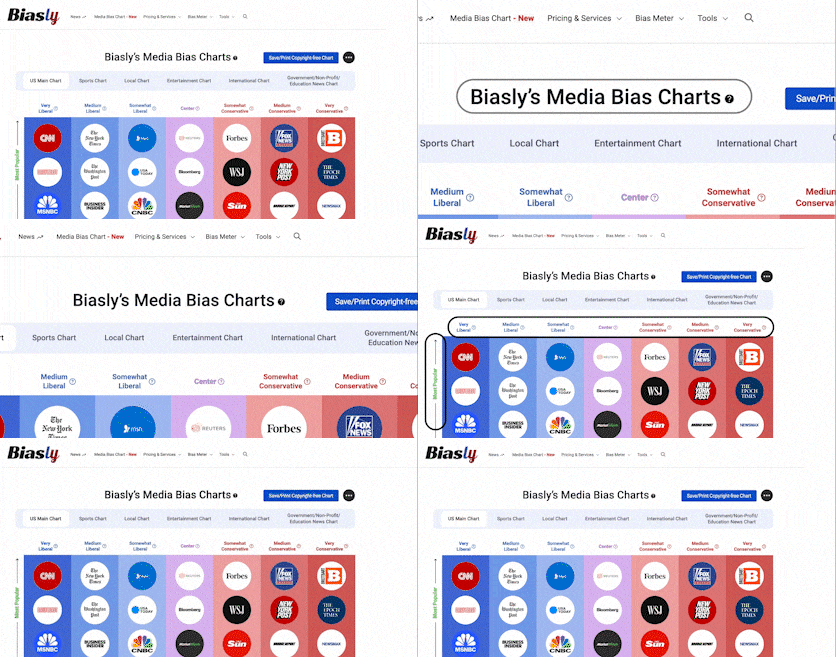
Breitbart on the media bias chart
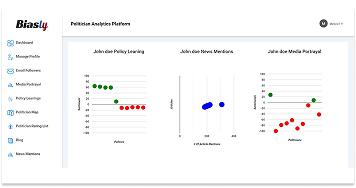
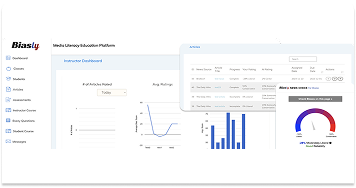
Breitbart has a Bias Score of 64% Medium Right which is based on a variety of factors including its policy and politician leanings, article ratings, and the use of biased language. Its Reliability is rated as Average, and additional analytical insights are available in the other tabs.

- Bias Rating
64% Medium Right
- Reliability60% Reliable AveragePolicy Leanings
14% Somewhat Right
Extremely
LiberalVery
LiberalModerately
LiberalSomewhat Liberal
Center
Somewhat Conservative
Moderately
ConservativeVery
ConservativeExtremely
Conservative-100%
Liberal100%
Conservative
Average Reliability
*Our bias meter rating uses data science including sentiment analysis, machine learning and our proprietary algorithm for determining biases in news articles. Bias scores are on a scale of -100% to 100% with higher negative scores being more liberal and higher positive scores being more conservative and 0% being neutral. The rating is an independent analysis and is not affiliated nor sponsored by the news source or any other organization.
Politician Portrayal11% positive
Continue For Free
Create your free account to see the in-depth bias analytics and more.
By creating an account, you agree to our Terms and Privacy Policy, and subscribe to email updates.
Log In
Log in to your account to see the in-depth bias analytics and more.
Policy Leanings Analysis
Policy | Bias score |
|---|
Breitbart Editorial Patterns
Breitbart’s coverage of political topics often reflects a Medium Right bias, with consistent patterns in phrasing, source selection, and thematic focus that are Moderately Conservative. While the publication demonstrates journalistic standards in many of its reports, the choice of issues, framing, and word usage can indicate a political slant in its reporting. This content analysis examines how Breitbart handles liberal and conservative issues and evaluates its language choices and editorial tendencies.
Coverage of Liberal vs. Conservative Topics
Breitbart’s articles include topics that matter more to Republicans, such as election concerns, border control, and healthcare. For instance, its coverage of topics related to international relations, anti-terrorism spending, and lower taxation policies frequently aligns with conservative viewpoints, often arguing that these issues should be handled in line with Republican policy preferences.
On the other hand, articles covering liberal figures or Democrat-led initiatives often employ a more critical tone. Biasly’s analysis of recent Breitbart articles reveals a tendency to highlight controversies or opposition surrounding Democratic policies. For example, in political campaign coverage, Democratic candidates may receive more scrutiny, with an emphasis on potential missteps or public backlash.
This news media bias manifests in subtle ways, such as placing greater prominence on Republican voices or using positive language when describing conservative stances. Words like “sensible,” “normal,” and “correct path forward” appear more frequently in conservative-oriented reporting, while liberal views are often framed as “ideology” or “social contagion”. This consistent choice of words reflects an editorial direction that can contribute to bias in news media.
Policy and Issue Framing
When covering border control, Breitbart often highlights laws that push for a tighter border, supporting politicians who call for stronger regulation. This aligns with a Medium Right media bias, especially so with its current readers, who often agree with Breitbart’s perspective. Similarly, coverage of anti-terrorism spending reflects a narrative consistent with Breitbart’s existing bias, often featuring voices from Republican politicians, residents, and organizations in favor of spending in that area.
In contrast, issues like healthcare spending, socialism, or student debt cancellation — typically associated with liberal platforms — are covered in a more cautious or critical tone. These stories are often framed as polarizing and, at times, as unnecessary.
Even in neutral coverage, phrasing choices shape perception. Articles will describe liberal proposals as “callous” or “overstretching government interference,” while conservative legislation may be described as “reasonable” or “a return to normalcy”. This consistent choice of words reflects an editorial direction that, even unintentionally, can contribute to bias in news media.
Coverage and Relevance
Breitbart’s reporting often touches on key issues central to the media political bias discussion, including immigration policies, divisive international politics, and political analysis. As such, it serves as a compelling case study for examining source bias and news media bias in state-focused reporting.
Readers who wish to further explore how Breitbart compares with other publications can visit Biasly’s Media Bias Chart to analyze tone and word choice in real time.
Breitbart Bias Analysis
Breitbart was founded in 2007, and remains an ever-growing news source within the United States. Breitbart positions itself as a growing national source focused on providing conservatively aligned news to the American public. It does not have as many readers as larger outlets like Fox News and CNN, but its audience continues to grow. However, it is still not considered a mainstream media source.
According to Similar Web, Breitbart reaches an average of 34,640,000 monthly viewers. When it comes to media bias, both AI and media analysts have evaluated its content, sources, and funding to determine its political leaning.
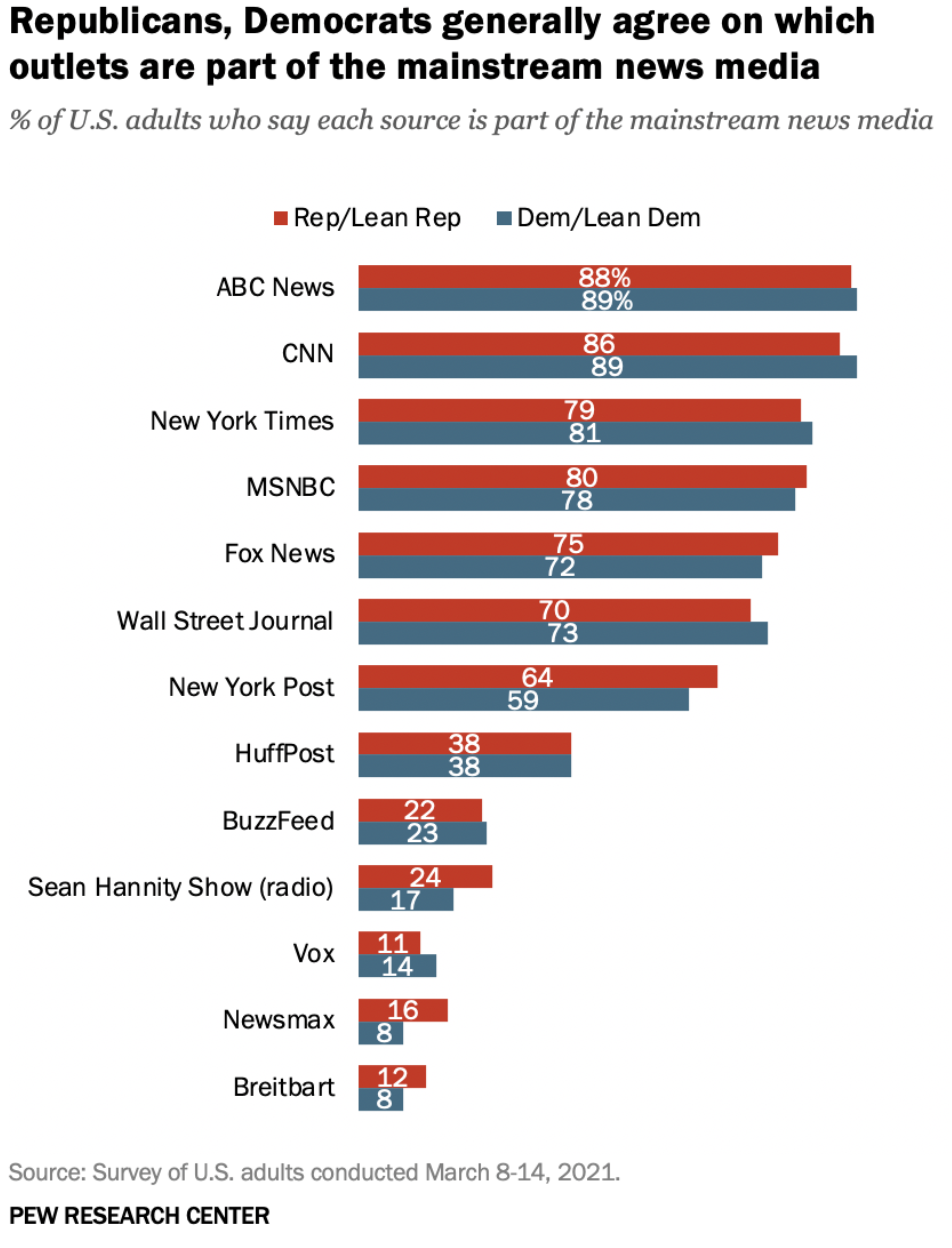
Source: Pew Research
As a national conservative news source, Breitbart plays a role in shaping public perception. Readers’ trust in the accuracy of news sources may mirror the conclusions reached by Biasly’s media bias ratings. This article delves into Breitbart’s editorial tendencies to explore whether political bias is present and, if so, to what degree.
Is Breitbart Biased?
Based on Biasly’s evaluations, Breitbart is rated as Medium Right.
By examining content patterns and the broader context of media influence, we aim to offer a balanced perspective on Breitbart’s political bias, and contribute to the ongoing discussion about bias in the news.
How Does Biasly Rate News Sources?
Biasly uses proprietary algorithms and a team of analysts to provide comprehensive bias evaluations across thousands of news outlets. Over 200,000 articles from more than 3,200 sources have been analyzed to identify the most accurate and unbiased stories.
Biasly assigns each outlet three key scores:
- Reliability Score – Reflects factual accuracy
- AI Bias Score – Generated via natural language processing
- Analyst Bias Score – Assessed by human political analysts
These scores are based on seven core metrics: Tone, Tendency, Diction, Author Check, Selection/Omission, Expediency Bias, and Accuracy. These elements help analysts and algorithms evaluate the political attitude conveyed by each article.
Biasly’s Bias Meter ranges from -100% (most left) to +100% (most right), with 0% indicating neutrality. The system evaluates individual articles based on political terms, policies, figures, and sentiment to calculate precise bias ratings.
Is Breitbart Politically Biased?
Breitbart earns a Medium Right rating for its AI Bias Score and a Medium Right for its Analyst Bias Score. The Analyst Bias Score is generated by reviewers from liberal, moderate, and conservative backgrounds. Analysts reviewed Breitbart articles and noted preferences in areas like coverage of conservative politicians and policy topics such as healthcare and immigration laws. However, the paper maintained objectivity on topics like border asylum for refugees and anti-discrimination laws.
For example, coverage of anti-discrimination laws reflects a mostly neutral tone. However, articles involving border control contributed significantly to the conservative score, with a Medium Right bias.
The locations of Breitbart’s head offices present an interesting contrast. Breitbart has central offices in cities such as Washington, DC, Los Angeles, London, Jerusalem, and Rome. Bigger cities tend to be more ideologically liberal, and many of the cities listed above are. There is a clear contrast between the locations of its central offices and the conservative tone of Breitbart’s content.
Breitbart and its readers lean more conservative, which could explain differing perceptions of Breitbart’s content. The paper may draw mixed reactions depending on readers’ political orientations.
This Bias score is determined through natural language processing that evaluates the tone, word choice, and opinion embedded in the reporting. Recent AI evaluations highlight conservative-leaning narratives in articles discussing the Democratic Party and government spending.
Analysis of Bias in Breitbart Online Articles
Breitbart has found that in-depth coverage of the United States’ politics from a conservative perspective attracts viewers. Given that much of its readership is also conservative-leaning, it’s essential to ask: is Breitbart truly biased?
To evaluate this, we can analyze select Breitbart articles through several of Biasly’s bias rating criteria: Tone, Tendency, Author, Diction, and Expediency Bias.
- Tone: The overall attitude conveyed by the article
- Diction: Specific word choices made by the writer
- Author: The background and social presence of the journalist
- Tendency: Patterns of bias in the writer’s broader body of work
- Expediency Bias: Quick visual or textual indicators like headlines and photos that imply bias
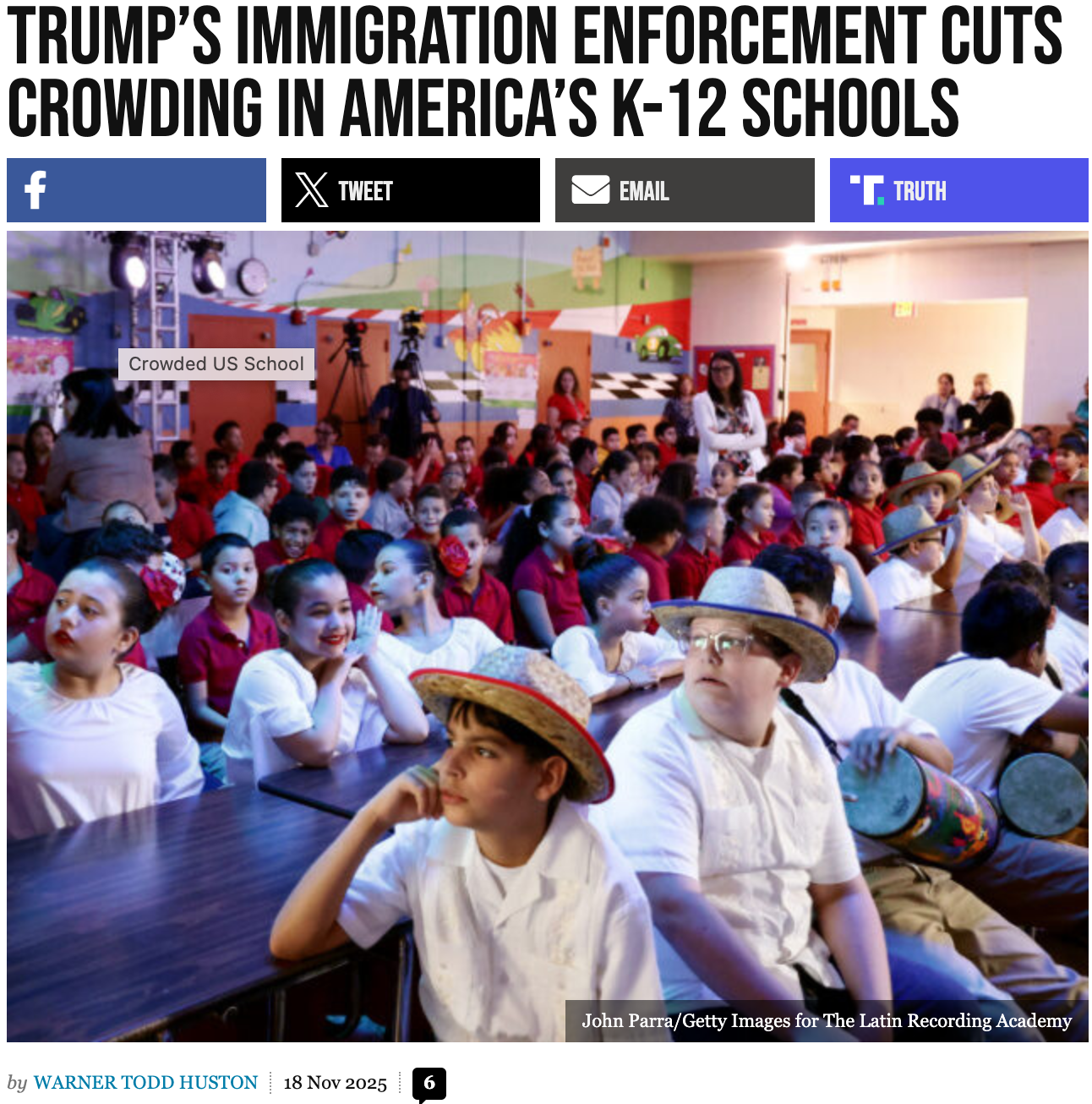
Source: Breitbart
One such article features a headline that draws a correlation between current President Donald Trump and the lower number of undocumented immigrant children in schools. A photo of a school celebration is used as the lead image, which may elicit a negative reaction from conservative readers. The article begins positively, emphasizing how the number of undocumented children has dropped in deep blue cities—a message likely to resonate with Breitbart’s readers.
Reporter Warner Todd Huston outlines the cities that have seen the effects of these policies. For instance, according to the article, a district that has experienced significant change is Miami-Dade in Florida. The statistics for Miami-Dade are shown and quoted extensively. While this lends weight to the article, it also reveals its slant, as these policies are regarded as positive.
“For example, Florida’s Miami-Dade school district is reporting a huge dip in enrollment with only 2,550 children of immigrants entering the system, which is a massive shift from the 14,000 reported during Biden’s last year in the White House and the 20,000 seen the year before that, according to the Associated Press.”
The article leans conservative in its portrayal of the declining enrollment numbers as something positive. By linking the provided facts from several cities to the “illegal aliens”, the author aligns the narrative with right-leaning ideals, emphasizing stronger border controls. This framing situates the subjects within a conservative ideological lens, further underscoring the article’s ideological slant.
Here are a few posts from Huston’s X (formerly Twitter) account that suggest a political preference. His personal views are reflected in the following examples:
Speaking truth to… something, something pic.twitter.com/QkSbZzYGyC
— Warner Todd Huston (@warnerthuston) February 7, 2026
That about sums it up… pic.twitter.com/QHH7ncbs65
— Warner Todd Huston (@warnerthuston) February 5, 2026
On the other hand, another article titled “U.S. to Designate Venezuelan Regime’s Cocaine Cartel A Terrorist Organization” is more balanced. It explains why Cartel de los Soles is designated a terrorist organization as of November 24th. Phrases and diction like “according to,” “recent information,” and “Rubio’s statement read” reinforce neutrality. Hot-button issues like drug cartels are presented factually, without spin:
“The Tren de Aragua is an organized criminal gang once based in Aragua state, Venezuela, that became an international menace after Maduro ordered a ‘raid’ of its headquarters, the Tocorón prison in Aragua, that resulted in large numbers of its imprisoned members and its leader escaping.”
The article employs diction and language that are notably restrained and formal, contributing to its overall neutral tone. Terms such as “informed” and “directed” are informative yet measured, conveying the dynamics of the designation without bias. The author also avoids emotionally charged words or loaded phrases often seen in more biased articles. Instead of framing the situation positively or negatively, she uses only neutral language.
In sum, Breitbart exhibits varying levels of bias in its reporting. While the Cartel de los Soles coverage maintains neutrality through balanced presentation and restrained language, Huston’s immigration enforcement article reveals a conservative slant by framing the statistics as something positive. Despite attempts at balance in some reporting, Breitbart’s tendency to highlight conservative initiatives and frame stories through a Republican lens indicates an overall right-leaning orientation, particularly when covering immigration to the United States.
Analysis of Breitbart Opinion Articles
To fully understand political bias in media, it’s important to distinguish between factual reporting and opinion pieces. While reporting aims to present facts and let readers form their own conclusions, opinion articles express personal viewpoints on current issues. Although the previous section examined factual reporting, this section turns to how bias surfaces through Breitbart’s selection and tone of opinion content.
One example is the article titled “CNN Comedy Show Host Michael Ian Black Says ‘I Kinda Think’ Trump ‘F**ed Around With Kids’”. The title itself does not signal any particular ideology, but the article quickly reveals a conservative stance. It expresses dissatisfaction with the statements Michael Ian Black posted and refutes them heavily. The author often tries to convince the audience that these are completely false. This may suggest that the author prioritizes persuasion over balanced information delivery.
In contrast, another piece titled “Ousted Bangladeshi PM Hasina Sentenced To Death In Absentia” employs more centrist language. Its title does not lean toward any political side and frames the situation neutrally. The subheading is unbiased and avoids emotionally loaded phrasing, indicating that the piece may be less ideologically charged.
These examples show that while not all Breitbart pieces are overtly conservative, the platform frequently publishes content that aligns with conservative stances. This consistent selection of opinion pieces can contribute to perceptions of systemic bias—particularly when the editorials predominantly support conservative views or causes.
This tendency underscores the importance of distinguishing subjective viewpoints from straight reporting, especially when interpreting the political leanings of any news organization.
How to Evaluate Bias
Although Biasly rates Breitbart as Medium Right, it’s important to note that bias can vary across articles. Breitbart also caters to a conservative audience with opinions on many issues, from state legislation to social developments. This complexity underscores the importance of examining each article individually. So, let’s learn how to evaluate media bias.
Recognizing media bias requires awareness and critical thinking. Often, readers trust news sources that affirm their existing beliefs, a psychological tendency known as confirmation bias. This makes it harder to identify slanted narratives or one-sided reporting.
To combat this, it’s essential to challenge your assumptions by consulting multiple viewpoints and verifying news through third-party analysis. Tools like Biasly’s media bias ratings allow readers to compare the same news story across the political spectrum.
Ultimately, bias isn’t always a matter of what is said; it’s also about what is left out, how topics are framed, and which stories are chosen for coverage. Learning to recognize these patterns can help readers make more informed decisions and develop greater media literacy.
To start comparing news outlets and gain a better understanding of bias, sign up for Biasly’s Media Bias & News Analytics Platform to see how stories vary between sources.
Breitbart Reliability Analysis
Is Breitbart Reliable?
Breitbart finds itself toward the middle of the spectrum, with neither high nor low accuracy. Its status as a conservative-leaning outlet may contribute to its moderate reputation for reliability. According to Pew Research, Americans are not widely familiar with Breitbart. In fact, most of the individuals who expressed trust in Breitbart lean to the right.
This suggests that Breitbart’s popularity among the U.S. residents may not stem from the reliability of its political news coverage. Further investigation is needed to determine whether bias or other factors are affecting its accuracy. At Biasly, we specialize in evaluating not just bias but also the reliability of media outlets. Let’s explore the accuracy and trustworthiness of Breitbart.
How to Evaluate Reliability?
Reliability refers to how trustworthy or accurate a news source is. If we can’t trust what we read, then continuing to consume content from that outlet serves little purpose. So how do we evaluate a news outlet’s reliability?
There are several potential measures of reliability to look out for when trying to determine whether a media source is reliable or not. Red flags for an unreliable article can include the presence of wild, unsubstantiated claims, facts dependent on other unreliable sources, heavy use of opinionated language, and more. In contrast, hallmarks of a reliable source include:
- Absence of subjective language
- Citing credible sources (e.g., .gov, .edu, academic references)
- Verifiable facts and statistics from multiple outlets
- Use of primary sources, like interviews or transcripts
- Consistency with coverage across other platforms
Biasly’s reliability scores incorporate these elements in evaluating media outlets.
So, How Does Breitbart Fare in Its Reliability?
The political reliability index developed by Biasly assesses both accuracy and trustworthiness. Breitbart currently holds Average Reliability Score, which is calculated as a weighted average of:
- Fact Analysis Score – Evaluates the accuracy of claims, facts, and evidence.
- Source Analysis Score – Assesses the number, diversity, and credibility of sources and quotes used.
Breitbart’s Source Analysis Score is Average at 56% Reliable. This suggests moderate trustworthiness in its sourcing practices. The score is AI-generated and considers quote length, frequency, diversity, and quality.
The Fact Analysis Score of Breitbart is Average at 62% Reliable. This further shows how well Breitbart supports its claims, addresses selection and omission bias, and presents verifiable evidence.
While Breitbart leans toward factual reporting, occasional lapses, such as unbalanced viewpoints or incomplete data, can affect its reliability rating. These nuances emphasize the importance of analyzing individual articles.
Breitbart’s Accuracy and Reliability
According to Biasly’s analysis, Breitbart maintains Average Reliability Score, but individual articles may vary significantly. Let’s dive into the details.
Political orientation plays a crucial role in how audiences perceive reliability. Breitbart has been accused of favoring a conservative narrative, potentially at the expense of factual reporting. To validate such claims, it’s essential to analyze whether the publication backs its assertions with sufficient evidence and diverse viewpoints.
Two common types of bias that affect factuality include:
- Selection Bias – Highlighting or omitting stories to fit a particular narrative.
- Omission Bias – Leaving out differing perspectives or relevant details to skew perception.
Biasly’s accuracy ratings use a scale from 1% (least accurate) to 100% (most accurate). Factors include the presence of supporting evidence, internal and external reliable sources, and balanced viewpoints.
For instance, Biasly gave The Daily Beast a Medium Left Bias and a Good Analyst Reliability Score. One Daily Beast article, titled “Trump Rewards Failed ‘Nazi’ Nominee With New Job”, showed an Average reliability rating for failing to include diverse viewpoints and for employing inflammatory language. Critical language towards Donald Trump did not stop at the headline, either, and the reporter failed to complement his selection of liberal opinions with views belonging to any other school of thought. In contrast, another piece from the outlet, titled “Trump’s Favorite Situationship Is Back On After MTG Breakup”, was slightly less left-leaning. There is still a heavy bias within the article, but it features political sources with balanced quotes. The most significant language criticizing Donald Trump and Elon Musk here can be seen in this quote:
“None have had quite the same relationship with the Trump administration as Musk, who gave about $300 million to Trump’s 2024 campaign, haphazardly cut federal government programs and agencies with DOGE, and then left the administration after 120 days. And none have had as bitter a war of words with Trump.”
We will take a closer look at more examples like this below to provide a further investigation into the reliability of Breitbart’s articles. This will include its use of selection bias, omission bias, and the quality of its sources and the facts it uses.
Analysis of Reliability in Breitbart’s Online News Articles
Breitbart aims to serve Americans with national and international news from a conservative perspective. Its staff includes writers from varying backgrounds, which can help balance coverage. However, readers should distinguish between news reporting and opinion pieces to evaluate credibility effectively.
One example is the article titled “Labour Getting Tough on Migrants to Tackle ‘Dark Forces Stirring Up Anger’”. Reporter Oliver Jj Lane covered the UK’s Labour Party’s claims to be stricter with immigration policies while referencing past debates and legal records. The article refrains from editorial commentary, sticking to quotes and fact-based language. Despite Breitbart’s Medium Right rating, this piece illustrates factual neutrality.
Quality of Sources and Facts Used
Breitbart typically relies on conservative sources that align with the perspective it seeks to express. Some liberal sources are cited, but they are typically used only for criticism. However, some articles skew in how comprehensively they present opposing viewpoints.
Consider the headline: “Swalwell: Trump Officials Will Face ‘Accountability’ When We Get The Majority.” While well-documented and supported by quotations from the interview, the article lacks insight into what Republicans have said in response to this. This absence creates a perception that everyone agrees with Swalwell, even though this is not the case.
Readers cannot find evidence opposing Swalwell’s claims in this article. Pam Key, Breitbart’s reporter, only mentions what Swalwell had said in the interview. The quotes are presented factually, which may enhance viewer trust in this regard. However, the absence of diverse perspectives leaves the audience with an incomplete understanding. A quote from Swalwell is presented as such in the article:
“Swalwell said, “Well, first, of course, these allegations are false, just like the allegations against Adam Schiff are false and Letitia James are false and Lisa Cook are false. A spoiler alert: there will be allegations next week against someone that’ll be false. No, the Justice Department has not said anything just through leaked media reporting. But this is really about Donald Trump going after his political enemies.”
In contrast, the article “Japan Issues Safety Warning To Travelers In China And Diplomatic Feud” maintains objectivity. It features multiple high-ranking sources from the Japanese and Chinese governments, without any editorial slant. Where it may be easy to pick a side between Japan and China, the author refrains from making any personal assessments. This allows readers to interpret differences in thought independently.
The article gains credibility through its 8 quotes from officials—6 long and 2 medium-length. These quotations strengthen reliability by providing full context and minimizing misrepresentation, thereby offering readers a more authentic and trustworthy account based on primary sources.
The article features more than five sources, primarily Japanese and Chinese government officials, along with facts drawn from the Japanese postwar constitution. The ideological range spreads between both countries, explaining the situation without catering to either side. This is evident in the contrast between China’s hardline stances and Japan’s unwillingness to retract its comments.
- Takachi Sanae, Japanese Prime Minister
- Japanese Embassy in China
- Kihara Minou, Japanese Government Spokesman
- Chinese Officials
- Onoda Kimi, Japanese Economic Security Minister
The article accurately reflects legislative records and the unfolding tension. Controversial statements—such as one Chinese official calling for Takachi’s head to be cut off—are presented as-is, leaving room for reader interpretation.
The article primarily relies on primary sources, which are highly valid and enhance its reliability. Given its focus on the stances on the rising Taiwan-centered tensions between Japan and China, including clear facts, raises public trust in Breitbart.
Selection and Omission Bias
Breitbart provides extensive coverage of the United States’ political climate through a conservative lens, which is reasonable given its readership. It is still important to note that bias may still emerge through framing and story selection.
In “Trump Narrows His Support For H-1B White-Collar Outsourcing”, selection bias surfaces through the article’s emphasis on positive opinions about these measures. The article does not explore negative opinions about the H-1B laws, presenting only viewpoints favorable to them. Still, it remains rooted in verifiable quotes.
The article does not highlight any negative opinions about the newly implemented H-1B legislation, either from politicians or residents. Therefore, the article leans slightly right in its framing. The author addresses the quotations and explains why, in his opinion, the H-1B laws are correct, without exploring broader or contrasting perspectives. That said, the reporting does not cross into overt editorializing and is, for the most part, grounded in verifiable facts and quotations.
By comparison, the article “Six in Ten Young Muslims in France Prefer Sharia Law, Four in Ten Back Islamist Groups” shows a stronger balance. Reporter Kurt Zindulka includes statistics from the Institut français d’opinion publique, a renowned polling firm in France. He also includes quotes from French politicians, notably from Marie Le Pen, who is ideologically on the right. A notable example of bias comes from a quote from her:
“How much longer will the Macronist power continue to dig itself deeper into denial? How much longer will we accept that the left and the far left, through electoral pandering, encourage this Islamist communalism?”
Zindulka uses numerous sources that are brought together. The article integrated polling data from a trusted source with commentary from French politicians. The politicians he mentions are from the French right-wing, which may introduce a slight bias despite the polling data. Overall, Zindulka used a well-rounded approach to delivering unbiased news to readers of Breitbart.
In opinion pieces, issues with factuality, sources, selection, and omission are frequently present. The articles we’ve covered so far reflect Breitbart’s Medium Right views, but this is not detrimental to its reliability. Its story selection favors issues that are more likely to concern conservatives. However, the contents of Breitbart’s article maintain accuracy and tend to cite evidence from numerous and varied sources.
So, is Breitbart Reliable?
Overall, Breitbart can be considered to be an outlet that is moderately reliable. It demonstrates a consistent goal of journalistic integrity and typically supports claims with sources and quotes. Occasional omissions and framing bias do appear, particularly on culturally sensitive or partisan issues.
As media literacy improves, readers can more readily detect issues such as selection bias, omission bias, and factual inaccuracies. To strengthen your ability to assess reliability across the political spectrum, use Biasly’s News Bias Checker to compare how multiple outlets report the same story.
This enables you to access more accurate, balanced, and reliable news.
Funding and Ownership
Who Owns Breitbart?

Andrew Breitbart, Founder, Breitbart – Source: Wikimedia
Breitbart was established in 2007 by two longtime friends, Andrew Breitbart and Larry Solov. The original intent of Breitbart was to provide information on news that was not being spoken of, and to do it from a conservative perspective. Andrew Breitbart passed away in 2012, and since then, Breitbart has been owned by Breitbart News Network LLC. It operates on a business model that derives its primary revenue from advertising.
Under its current structure, Breitbart relies on advertising as its primary source of revenue. These advertisements often agree with Breitbart’s own viewpoint. There may be advertisements about Republican candidates vying for governmental positions, or others that support Republican legislation. Other advertisements depend on the person’s location and can be innocuous, unrelated to politics.
This may call into question Breitbart’s reliability, as readers may encounter advertisements and leave with a skewed perspective. Biases may arise even unintentionally. This approach may confuse readers who are looking only for the unblemished facts.
Who Funds Breitbart?
Breitbart is currently owned and run by Breitbart News Network LLC. However, much of the power is consolidated between Larry Solov, Susie Breitbart, and the Mercer Family. Since its creation, the outlet has earned most of its revenue from advertisements on its website. Its funding comes primarily through reader memberships and advertising sales.
In practice, Breitbart’s advertisements should not put its reliability into question. However, most of the advertisements it uses are conservatively aligned, which raises questions. In practice, Breitbart’s advertising alone does not determine its reliability. However, the predominance of conservative-aligned ads can reinforce its ideological profile and may influence how some readers perceive its neutrality.
Additional Insights
News Source Comparison
In news source comparisons, Breitbart is often evaluated alongside other regional and national outlets that lean right or very right. Sources like the New York Post, Fox News, or the Wall Street Journal often present similar tones and editorial philosophies. Breitbart maintains a Medium Right media bias because of its proclivity to present its news from a conservative perspective. It differs from more moderate sources in that it typically does not include opposing viewpoints.
This contrasts with more unbiased media outlets that consistently present neutral statements. Readers seeking balanced political coverage may compare Breitbart’s framing of issues with outlets rated as Center on our Media Bias Chart, or explore other papers on our Similar Sources page.
Notable Contributors and Authors
Breitbart features a diverse range of reporters and columnists, many of whom are deeply familiar with the United States’ political climate. Reporters such as Warner Todd Huston, who frequently cover political controversies and immigration, exemplify the outlet’s strength in national-level journalism.
Other contributors focus on healthcare, politics, or important legislation—topics central to Breitbart’s conservative audience. While some contributors may be seen as leaning right in tone or topic selection, their work is generally grounded in factual reporting. The presence of recurring bylines helps readers evaluate individual journalists’ bias over time.
Related Tools and Resource Pages
To better understand how Breitbart fits into the broader media landscape, we recommend exploring these helpful resources:
- Media Bias Chart: See where Breitbart ranks among hundreds of media outlets across the political spectrum.
- Political Bias Chart: Visualize political slants of news sources across various policy areas.
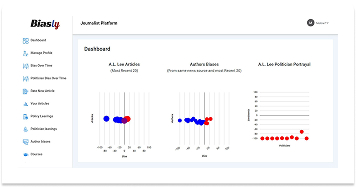
- Journalist Bias Analytics Platform: Explore how individual journalists contribute to bias within their publications.
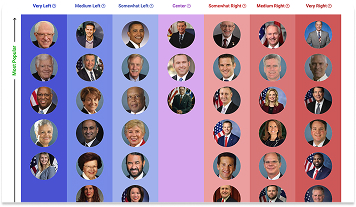
- Politician Bias Analytics Platform: Compare how politicians are framed differently by Breitbart and other outlets.
- Media Literacy Education Platform: Learn how to critically assess media sources, bias techniques, and news reliability.
Frequently Asked Questions
Breitbart is rated as Medium Right based on Biasly’s media bias algorithm, which assesses sentiment, article framing, and policy favorability.
Yes, Breitbart has been accused of fake news a number of times. One prominent example was during the COVID-19 pandemic, when Breitbart is said to have downplayed the pandemic’s threat. This may have led readers to treat the situation with less seriousness than it warranted. Breitbart has also made comments about climate change that may be considered misleading. It has published articles asserting that the United States National Oceanic and Atmospheric Administration’s reports are false.
Biasly uses a combination of AI sentiment analysis and human analyst review to assess tone, fact accuracy, source quality, and media bias indicators. Learn more on our Bias Meter page.
Generally, yes, though partisan framing and selective reporting can affect perceived reliability.
Ratings are based on recent news using data science and A.I. technology.
Military Spending
| Date | Sentiment | Associated Article | Snippet |
|---|---|---|---|
| 08/25/2019 | 75% For | Trump Family Detentions Flores Agreement (link) | So, of course, the Trump administration is doing the opposite in a baldfaced |